DELM: Predicting Enzymatic Degradation of Plastics with Language Models
DELM[1] predicts whether an enzyme degrades a given plastic, directly from the enzyme's amino-acid sequence — no structure required. A protein language model (ESM2) encodes the enzyme and a polymer language model (polyBERT) encodes the plastic; a cross-attention head fuses them to output a degradation probability. Paste an enzyme and DELM ranks which plastics it is most likely to degrade.
Run a Prediction
Paste one or more enzyme sequences in FASTA format or upload a FASTA file, choose a plastic (or rank all of them), and submit. Each run opens a dedicated, bookmarkable result page.
Predictions currently run on a CPU server. The enzyme embedding is computed once and scored against each plastic, so ranking all plastics is nearly as fast as scoring one. The result page shows live progress, can be bookmarked or shared, and is retained for one week.
How DELM Works
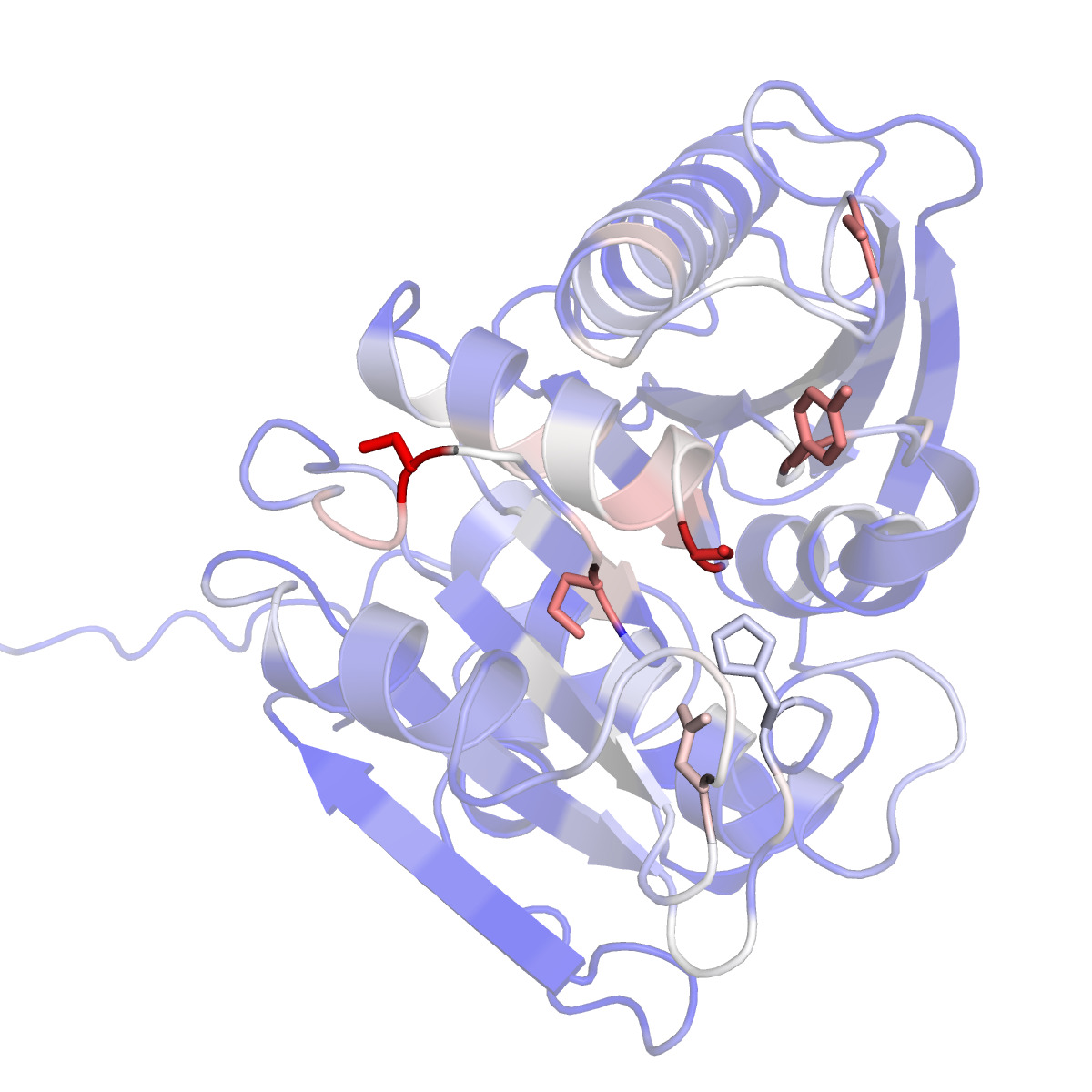
Protein sequences and polymer PSMILES are encoded by two pretrained language models — ESM2[2] for the enzyme and polyBERT[3] for the plastic. A cross-attention module lets protein residues and polymer atoms attend to one another; the fused representation is pooled and passed to a classifier that outputs the degradation probability. Predictions are averaged over five cross-validation folds.
Performance
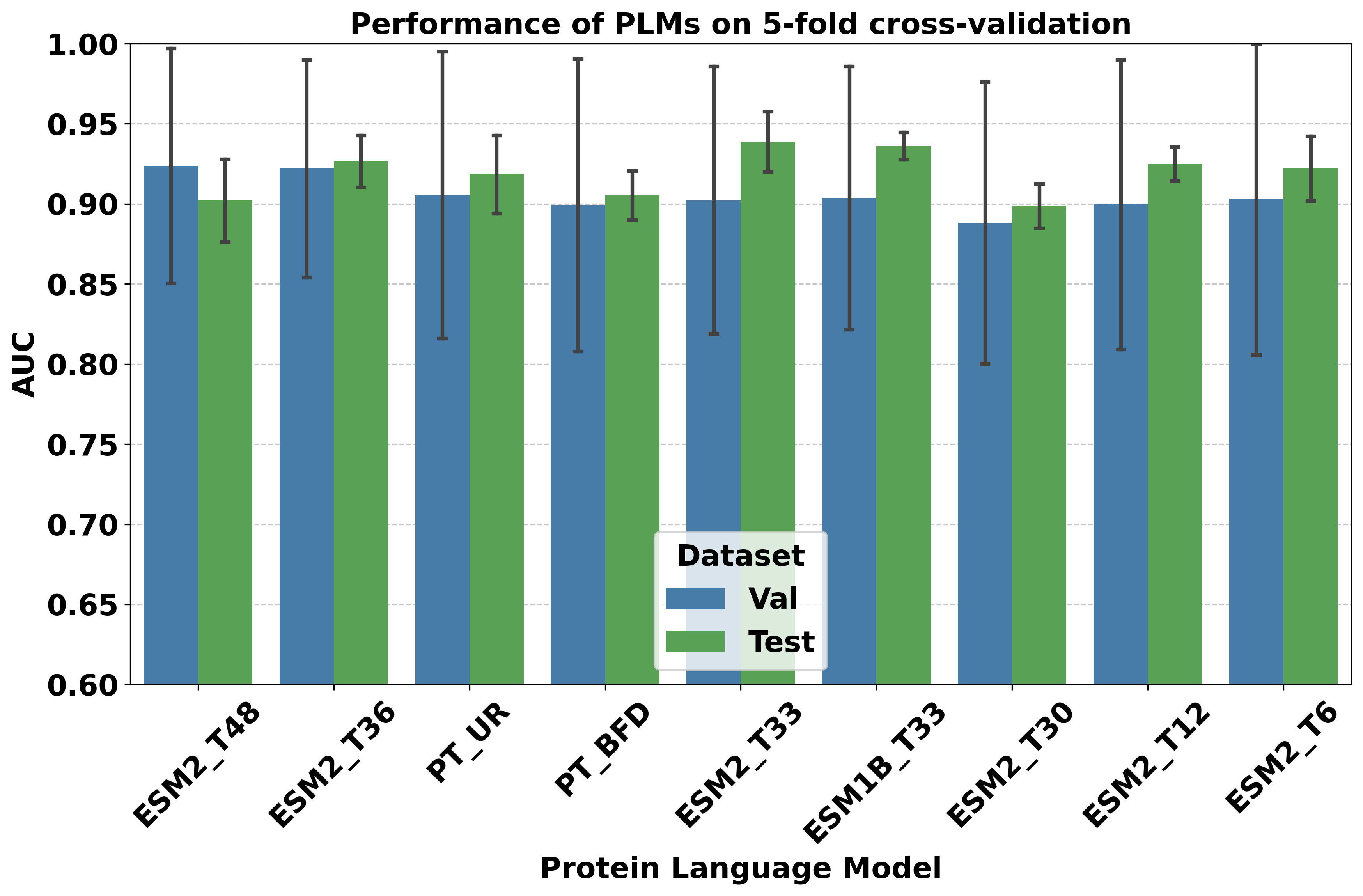
Across nine protein language models, medium-sized models give the best test AUC; the largest (3B/15B) do not improve accuracy on this dataset. DELM therefore uses ESM2-t33-650M, which is both accurate and light enough to serve on CPU.
Supported Plastics
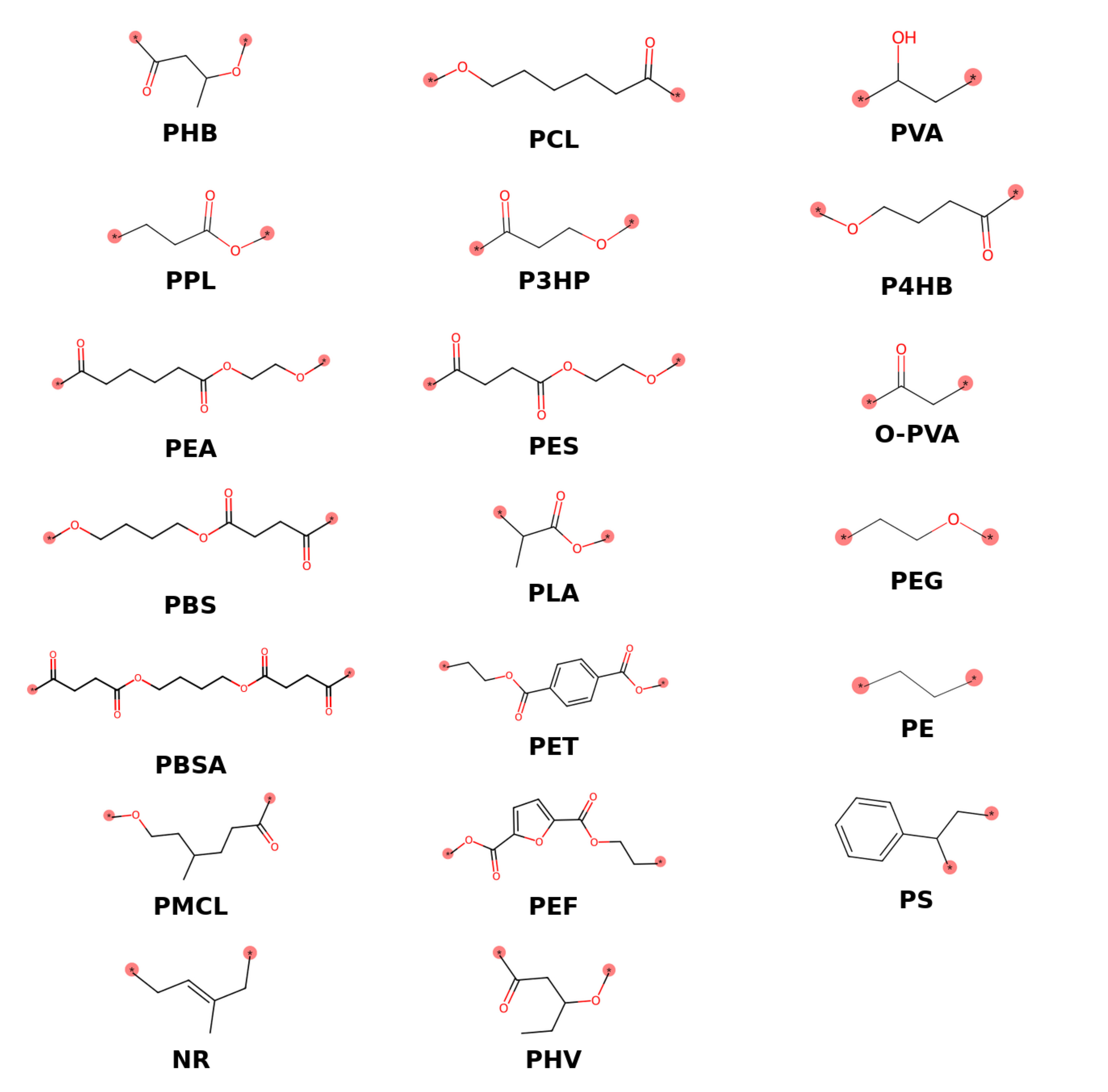
DELM scores enzymes against the plastics it was trained on:
References
- ^ Xu, S.; Xu, K.; Onoda, A. Accurate Prediction of Enzymatic Degradation of Plastics by Language Models. Chem. Lett. 2025.
- ^ Lin, Z.; Akin, H.; Rao, R.; Hie, B.; Zhu, Z.; Lu, W.; Smetanin, N.; Verkuil, R.; Kabeli, O.; Shmueli, Y.; et al. Evolutionary-Scale Prediction of Atomic-Level Protein Structure with a Language Model. Science 2023, 379 (6637), 1123–1130. DOI: 10.1126/science.ade2574
- ^ Kuenneth, C.; Ramprasad, R. polyBERT: A Chemical Language Model to Enable Fully Machine-Driven Ultrafast Polymer Informatics. Nat. Commun. 2023, 14, 4099. DOI: 10.1038/s41467-023-39868-6
Please contact shijie.xu@ees.hokudai.ac.jp for any questions.
Changelogs
- 2026-05-28First release on the Onoda Lab portal.